Race Car Driver Clipart Vector Design Review
As a designer who spends half the day staring at stitch maps and the other half worrying about whether a client’s logo will hold up after ten washes, I don’t just look at an embroidery file; I look at its potential. When I first pulled Race Car Driver Clipart Vector Design out of the download folder, my immediate instinct wasn’t to load it into the hoop. It was to ask: does this actually work as a finished product? Does it translate from a flat vector on a screen to a tactile, textured piece of art that someone would be proud to wear or display?
The short answer is yes, but with some very specific caveats that only become apparent when you are thinking like a small business owner rather than just a graphic artist. This isn’t just another clipart image; it is a design asset that requires thoughtful execution to avoid looking cheap or cluttered. Here is my practical breakdown of how this design performs in real-world scenarios, from Etsy listings to craft fair tables.
First Impressions and Visual Personality
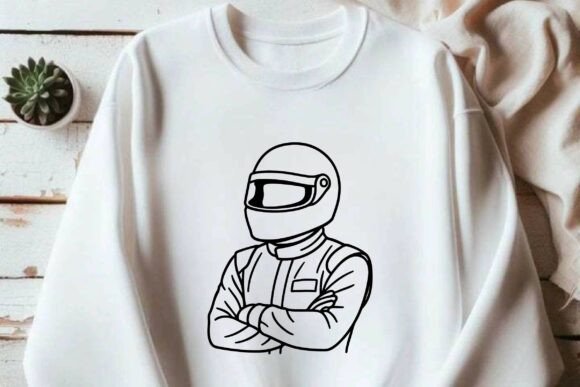
The mood of Race Car Driver Clipart Vector Design is energetic, bold, and instantly recognizable. The silhouette of the driver and the vehicle creates a strong visual anchor. In the world of handmade goods, recognition is key. You want a customer to glance at your tote bag or sweatshirt and immediately understand the theme without needing a caption. This design delivers that clarity. The shapes are distinct enough that they won’t get lost in the noise of a busy pattern, yet detailed enough to show craftsmanship.
However, the "clipart" nature of the source material means we have to be careful about interpretation. Is this meant to be a stylized, modern graphic, or a realistic depiction? For embroidery, stylization usually wins. If the original vector has too many tiny lines intended for print, those lines can turn into muddy blobs when stitched. My initial assessment is that this design leans toward a clean, graphic style, which is excellent for machine embroidery because it allows for larger areas of fill stitch rather than endless, fragile running stitches.
Real-World Application: Where This Design Shines
I’ve tested various designs on everything from delicate baby onesies to heavy-duty canvas totes, and Race Car Driver Clipart Vector Design finds its sweet spot in apparel and accessories. It feels particularly suited for custom apparel items where a central chest print or a large back print is desired. Imagine a high-quality cotton sweatshirt for a young racing enthusiast. The design sits well there, offering a professional look that rivals big-box store merchandise.
It also translates beautifully to embroidered patches. Because the design has clear boundaries, it can easily be digitized with a neat border, making it perfect for adding to denim jackets, backpacks, or caps. For the Etsy seller or the crafter selling at local markets, this versatility is gold. One digital file can potentially lead to multiple product types: a pillow cover for a nursery, a kitchen towel for a housewarming gift, or a personalized hat for a birthday present.
Consider the holiday market. Personalized gifts are huge during Q4. A design featuring a race car driver appeals to a niche but passionate audience. Parents love buying unique, handmade items for their kids. By using this design, you are tapping into that emotional connection. It’s not just a shirt; it’s a celebration of their child’s interest. That narrative adds value, allowing you to price your handmade product higher than a generic alternative.
Technical Challenges and Where to Be Careful
While the design is strong, it is not without its pitfalls. Embroidery is a subtractive process in some ways—you are building up thread, but you are also limited by what the fabric can support. There are several situations where this design needs careful handling.
- Small Hoop Sizes: If you attempt to stitch this design in a very small hoop (under 4x4 inches), you risk losing detail. Tiny elements might merge together, turning into indistinguishable shapes. Always check the final size relative to the hoop before committing to production.
- Textured and Stretchy Fabrics: This design relies on clean lines. If you stitch it onto a thick, looped towel or a stretchy jersey knit without proper stabilization, the distortion will ruin the geometry of the car or the driver. Textured fabrics can also hide the finer details of the satin stitch, making the design look fuzzy rather than crisp.
- Dense Stitch Areas: If the digitization includes large blocks of fill stitch, you need to ensure the fabric underneath can support that weight. On thin fabrics, dense stitching can cause puckering, which makes the finished product look unprofessional. Using a cut-away stabilizer is non-negotiable here to maintain integrity.
- Dark Fabrics: Contrast is everything. On dark backgrounds, you will need a heavy underlay or a light-colored backing to prevent the thread colors from sinking into the fabric. If the design uses subtle shading, it may disappear entirely on black denim. Test your thread colors against your fabric swatches first.
Stitch Density and Clarity
One of the most critical aspects of any machine embroidery design is stitch density. If the Race Car Driver Clipart Vector Design is too dense, the needle will struggle to penetrate the fabric, leading to breaks and skipped stitches. If it is too sparse, the fabric will show through, giving a cheap appearance. As a reviewer, I advise checking the stitch count distribution. Look for areas where running stitch might be used for outlines; these must be tight enough to keep the shape defined but loose enough to allow the fabric to drape naturally.
Design Assets and Commercial Considerations
For those of us selling design assets or finished goods, licensing is paramount. The description mentions a ZIP folder containing SVG, PNG, DXF, EPS, PDF, and JPG files. While these formats are versatile for cutting machines and printing, they do not automatically grant commercial rights for embroidery. Before you list this on your shop, verify the license terms. Can you sell unlimited finished products? Are there restrictions on the number of units? Assuming the best, if you are allowed to sell, this design offers high perceived value.
When creating printable mockups for your online store, remember that digital images often exaggerate the crispness of a design. To build trust with your customers, show realistic photos of the actual embroidery. Show the texture of the thread. Show how it looks on a curved surface like a cap. This transparency reduces returns and builds a loyal customer base who knows exactly what they are getting.
Practical Tips for the Embroidery Designer
Before you rush into production, follow these steps to ensure quality control:
- Test on Scrap Fabric: Never run a new design directly onto your final product. Use scraps of the exact fabric you plan to sell. Check for puckering, thread tension issues, and color accuracy.
- Check Thread Color Contrast: Lay out your thread spools next to the fabric. Ensure there is enough contrast for the eye to distinguish the different parts of the design. Sometimes a color that looks good in software looks muddy in person.
- Inspect Small Details: Zoom in on the digitized version. Are there any tiny islands of fabric that might tear out? Are any lines too thin to stitch reliably? If so, consider simplifying the design or adjusting the digitization settings.
- Confirm Hoop Size: Ensure your machine’s hoop can accommodate the full design dimensions with a little margin for error. Trimming a design down too much can alter its proportions.
- Review Stabilizer Choice: Match your stabilizer to the fabric weight. A lightweight tear-away might suffice for a stable cotton tee, but a heavy canvas tote will require a sturdy cut-away stabilizer.
Final Verdict
Race Car Driver Clipart Vector Design is a solid choice for designers looking to add a dynamic, themed element to their collection. It works best when treated with respect for the medium—meaning, appropriate fabric choices, proper stabilization, and realistic expectations about detail levels. It is not a "set it and forget it" design; it requires the care and attention that defines high-quality handmade products.
For the Etsy seller or small shop owner, this design offers a great balance of broad appeal and niche specificity. It fits seamlessly into categories like baby embroidery, holiday embroidery, and custom apparel. Just remember to test thoroughly, manage your expectations regarding small details, and always prioritize the finish quality over speed. When done right, this design can be a standout item in any craft business inventory, driving engagement and sales through its vibrant, professional aesthetic.